
Editorial
Why Being Kind Is Harder Than It Sounds, and Why It Matters More Than Ever
Be kind.
It's one of the simplest pieces of advice in the world. We teach it to toddlers. We print it on posters and T-shirts. And yet, in a world that's moving at lightning speed, where meaningful connection feels harder and harder to find and people seem more divided than ever, actually practicing kindness can feel surprisingly difficult.
David Friedman has been thinking about that challenge for a long time. He is the songwriter behind "We Can Be Kind," a song that has been embraced by audiences, choirs, and communities who find in it a simple, powerful reminder of what's possible when we choose compassion. In We Can Be Kind: Healing Our World One Kindness at a Time, he brings the song's central idea off the stage and into everyday life.
The book is about treating one another with greater compassion in every part of our lives: with our children and family members, our coworkers, strangers, and neighbors, and even with the people on the other side of the political aisle. That last one may be the hardest. It's easy to be kind to people we like and agree with. It's much harder to extend that kindness to people who frustrate or oppose us. Friedman doesn't pretend that's easy, but he makes a compelling case that it's where kindness matters most.
Through stories, meditations, and practical suggestions, Friedman shows how small choices in the way we speak and respond can transform our relationships and our communities. A patient reply instead of a sharp one. A moment of genuine attention for someone who feels invisible. Curiosity instead of judgment. None of these requires grand gestures, and all of them add up.
There's also good evidence that kindness benefits the giver as much as the receiver. Researchers who study happiness and well-being have found that performing acts of kindness can boost people's mood, strengthen their sense of connection, and even reduce stress. Some people describe a warm, uplifting feeling after helping others, sometimes nicknamed a "helper's high." Kindness also tends to be contagious. When people witness or receive kindness, they're more likely to pass it along, creating ripple effects that spread through families, workplaces, and neighborhoods. In other words, every small kindness is a tiny investment in a better community.
That's the heart of Friedman's message. By choosing kindness, he writes, we become more fully connected, alive, and integrated, both within ourselves and with the world around us. Kindness isn't just something we do for others. It's something that changes who we are.
Friedman is the perfect guide for this journey. He is an award-winning composer and conductor whose career has spanned Broadway, Disney films, and recordings with artists including Diana Ross, Barry Manilow, and Nancy LaMott. He is also a teacher and the creator of The Thought Exchange, an approach to working with our thoughts and feelings. His writing is warm, wise, and deeply human, and his stories will make you smile, reflect, and look at the people in your life a little differently.
We Can Be Kind is for anyone who feels weary of division and wants a practical path toward connection. It makes a lovely gift for friends, family, teachers, and community leaders, and it's the kind of book you'll want to keep on your nightstand for those days when kindness feels hardest. Start with one small act today, and see where it leads.
We Can Be Kind: Healing Our World One Kindness at a Time by David Friedman is available now in paperback and hardcover.
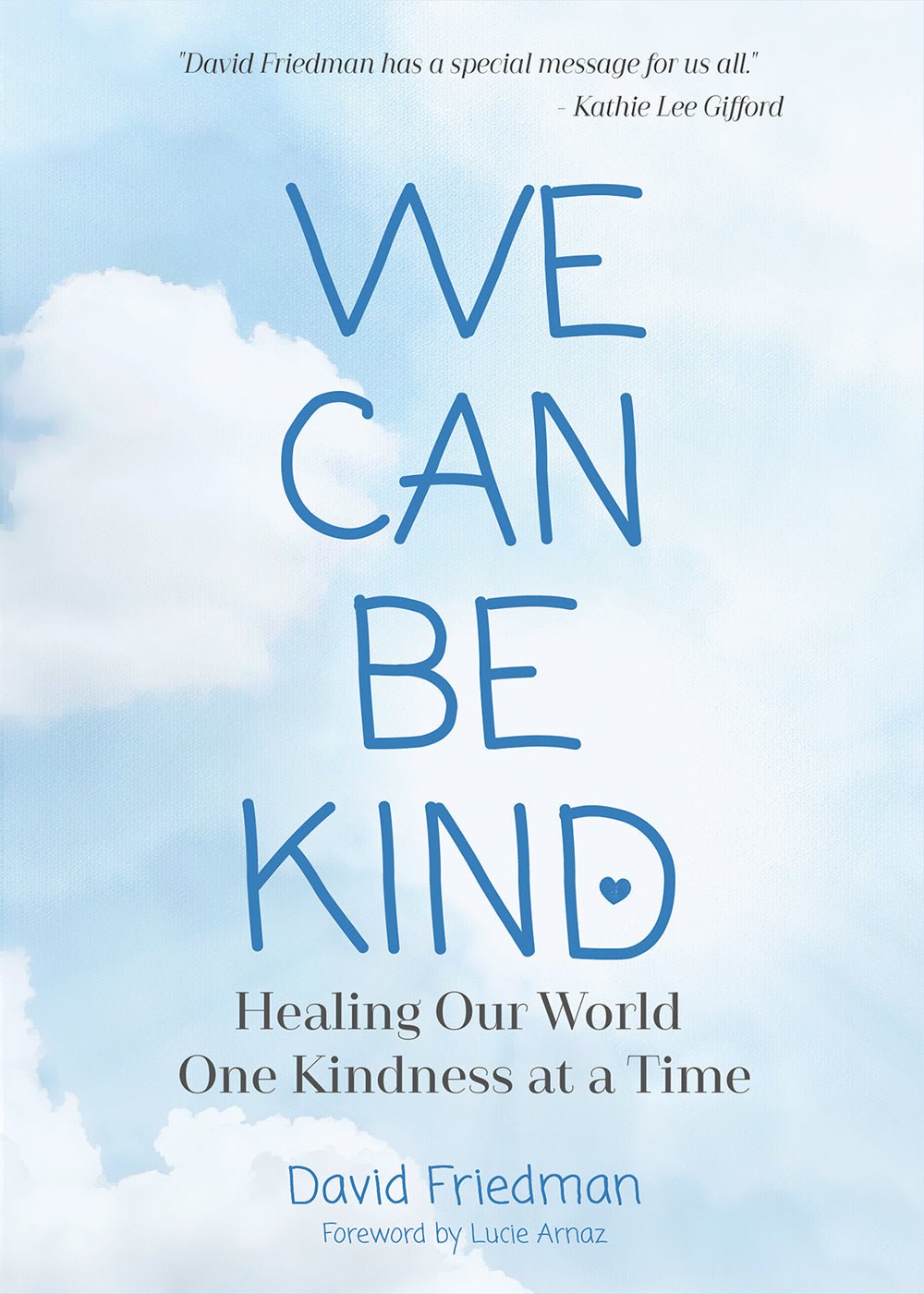
We Can Be Kind: Healing Our World One Kindness at a Time
by David Friedman
The world is changing at lightning speed, and meaningful connections are increasingly elusive.


