
Editorial
The Missing Piece in Positive Thinking: Resistance
It's one of the most frustrating experiences in personal growth. You read an inspiring book or hear a powerful idea about the power of thought. You decide to think differently, more positively, more confidently, more hopefully. And for a little while, it works.
Then, moments or days later, you find yourself right back where you started, thinking the same old thoughts and seeing the same old results.
Why does that keep happening? That's the question David Friedman set out to answer in The Thought Exchange: Overcoming Our Resistance to Thinking New Thoughts, the original book that launched his influential approach to personal change.
The book arrived at a moment when ideas about the power of thought were everywhere. Books like The Secret had popularized the notion that our thoughts shape what we experience in the world, and millions of readers were trying to put that idea into practice. But many of them ran into the same wall. Holding on to new, positive thoughts turned out to be much harder than it sounded.
Friedman's insight was that something was missing from the conversation. Most approaches focus on adopting new thoughts. Few look carefully at the thoughts we're already thinking underneath, the older beliefs and assumptions that quietly run the show. Those underlying thoughts don't disappear just because we decide to think something new. And when we try to think differently, they often push back, sometimes through uncomfortable feelings and sensations in the body. That pushback is what Friedman calls resistance.
The Thought Exchange offers a way through. It's a process for identifying the thoughts we're actually thinking, consciously exchanging them for new ones, and, crucially, learning to stay with those new thoughts long enough to see results, even when resistance shows up. Rather than treating discomfort as a sign that something is wrong, the approach treats it as a natural part of change, something to notice and move through rather than run from.
That idea resonates with a lot of what people discover whenever they try to change a long-standing habit. Whether it's a pattern of thinking, a way of reacting under stress, or a belief about ourselves, old habits are familiar and, in a strange way, comfortable. New ways of thinking feel awkward and even unsafe at first. Real change often requires tolerating that discomfort long enough for the new pattern to take hold. Friedman gives readers a clear, practical method for doing exactly that.
The book has earned passionate praise. Kathie Lee Gifford called it "the only self-help book you need to read," and actress Lucie Arnaz described practicing Friedman's ideas as the most fundamentally life-changing, positive experience she'd ever had.
Friedman brings a fascinating perspective to the subject. Before he became known as a teacher of The Thought Exchange, he built a career as an award-winning composer and conductor, working on Broadway and Disney films and recording with artists including Diana Ross, Barry Manilow, and Nancy LaMott. His warmth, humor, and gift for connecting with audiences carry through to the page.
The Thought Exchange is for anyone who has tried positive thinking and found it didn't stick, anyone curious about how thoughts shape experience, and anyone ready to understand, and move past, the resistance that keeps old patterns in place. Readers who want to go deeper can continue with the 20th Anniversary Edition and the companion workbook, It's All Inside.
The Thought Exchange: Overcoming Our Resistance to Thinking New Thoughts by David Friedman is available now in paperback and hardcover.
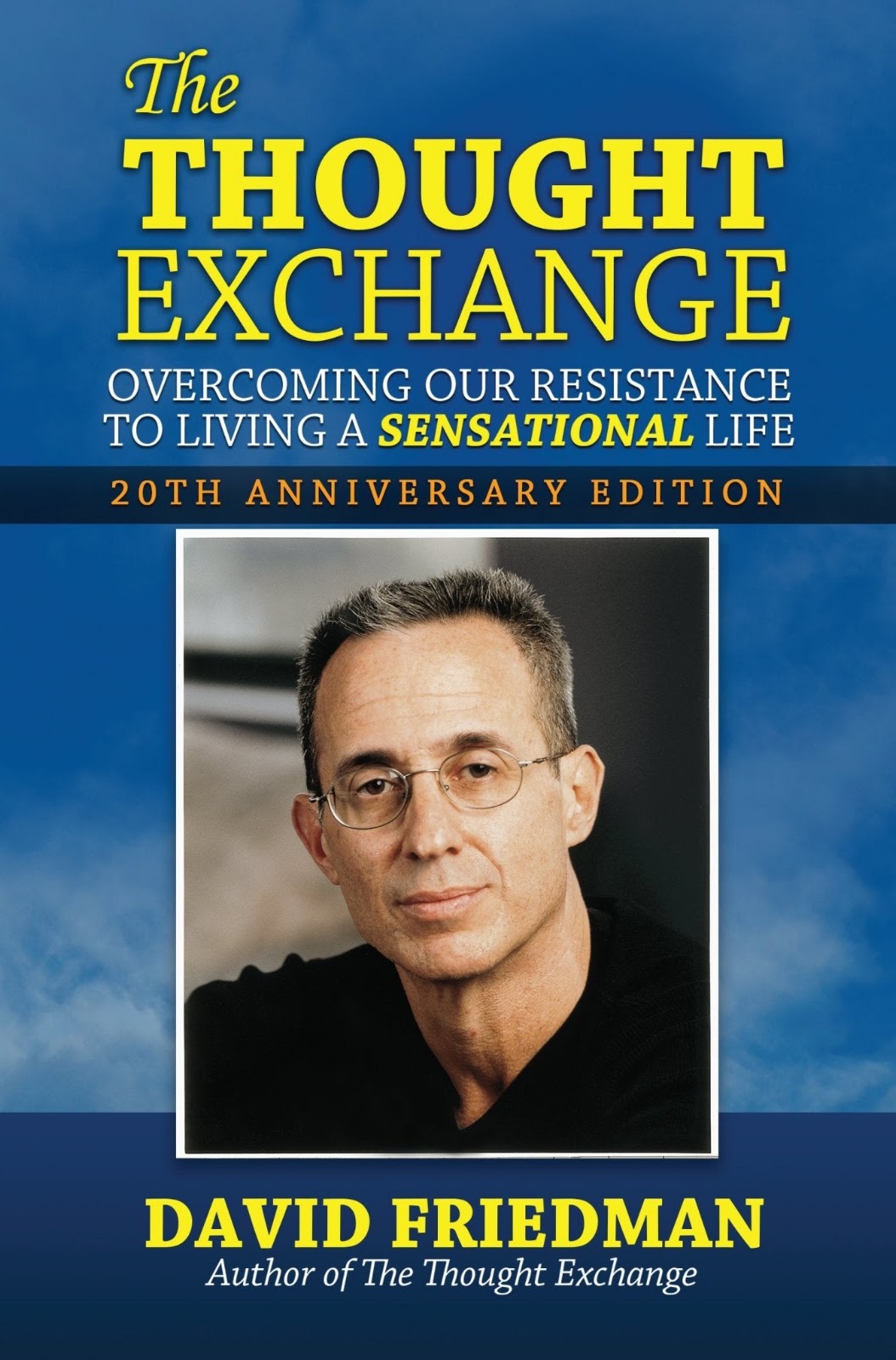
The Thought Exchange: Overcoming Our Resistance to Thinking New Thoughts
by David Friedman
With the proliferation of books like "The Secret," we now know that what we think appears in the world as what we see there.


