
Book Announcement
A Coded Message, a CIA Veteran, and a Conspiracy Reaching Into Royal Circles
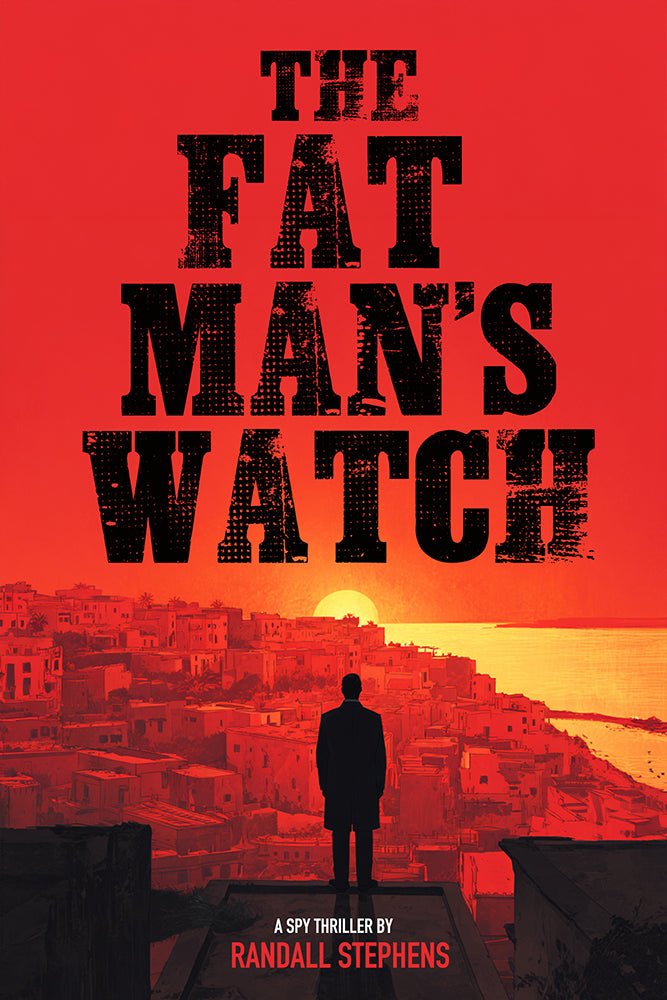
It starts with a coded transmission, bouncing across three countries: Northern Ireland, Spain, and Morocco. To America's intelligence network, it looks like routine chatter at first, the kind of noise analysts sift through every day.
Then someone mentions Oujda.
That single word sets The Fat Man's Watch in motion. Randall Stephens's espionage novel is a taut, globe-spanning thriller about the shadow world of modern intelligence, where the real question isn't who fired the shot, but who paid for the bullet.
At the center of the story is Fred "Fat Freddie" Ward, the CIA's legendary Chief of Station in Morocco. If that title is unfamiliar, it's one of the most important jobs in American intelligence. A Chief of Station is the senior CIA officer in a foreign country, usually working out of the U.S. embassy, responsible for overseeing the agency's operations there and managing relationships with the local intelligence services. It's a role that demands patience, judgment, and an encyclopedic knowledge of the region. Ward has spent twenty-nine years in the field. He has seen everything. But this time, the signals don't add up.
The setting is a big part of what makes the novel so fresh. Espionage fiction has long been dominated by Washington, London, Moscow, and Berlin. Stephens takes readers somewhere different. Morocco sits at one of the most strategically important crossroads on Earth. At the Strait of Gibraltar, only about fourteen kilometers of water separate it from Spain, making it a gateway between Africa and Europe and between the Mediterranean and the Atlantic. Oujda, the city that sets off Ward's alarm, lies in the country's northeast, close to the border with Algeria. Places like these have long been hubs of trade, migration, and, inevitably, intelligence activity. Stephens uses that rich, layered geography to give his story a sense of place that most spy novels can't match.
As fragments of an international conspiracy surface, the pressure builds. There are assassins for hire, encrypted calls, and whispers of a plot reaching into royal circles. Ward has to race to piece together the truth before it detonates into global chaos. The action moves from Langley to London and from Rabat to Madrid, and at every stop, alliances are tested and loyalties blur. Every message hides a secret, and every operative knows too much.
What sets the book apart is its sense of authenticity. Much of the tension comes not from car chases or gunfights but from the slow, nerve-racking work of real intelligence: interpreting incomplete information, weighing sources you can't fully trust, and making decisions when you only have part of the picture. In Ward's world, how an operative reads a message can matter as much as the message itself. That makes the novel both thrilling and surprisingly educational, a window into how intelligence work actually feels from the inside.
At more than 400 pages, The Fat Man's Watch is a substantial, immersive read, the kind of book you settle into for a long weekend and don't want to put down. Its hero is a refreshingly human one, too: not a young action star but a seasoned veteran whose greatest weapons are experience, instinct, and a deep understanding of the region he has spent his career in.
This is a must-read for fans of classic and contemporary spy fiction, readers who love international settings, and anyone fascinated by the hidden world of intelligence work. Taut, authentic, and relentlessly fast-paced, it's espionage fiction that takes you somewhere new.
The Fat Man's Watch by Randall Stephens is available now in paperback and hardcover.
The Fat Mans Watch
by Randall Stephens
When a coded transmission crosses three continents—Northern Ireland, Spain, and Morocco—America’s intelligence network stirs awake. At first, it looks like routine chatter.


