
Editorial
Pesto Isn't a Recipe. It's a Process, and It Can Take You Around the World
Ask most people what pesto is, and they'll describe the same thing: a bright green sauce of basil, pine nuts, garlic, Parmesan, and olive oil. Delicious, yes. But Jessica Paholsky thinks we've been thinking about pesto far too narrowly.
In Once Upon a Pesto: Master the Pesto Process, she makes a simple but game-changing argument: pesto isn't a recipe. It's a process. And once you understand that process, a whole world of flavor opens up. Her cookbook proves it with 120 internationally inspired recipes drawn from forty countries and cultures.
A little history shows why that idea makes so much sense. The classic basil pesto most of us know, pesto alla genovese, comes from Genoa, in the Liguria region of northwestern Italy. But the word "pesto" doesn't actually refer to basil at all. It comes from the Italian verb pestare, meaning "to pound" or "to crush," the same root that gives us the word "pestle." Traditionally, pesto was made by grinding ingredients together in a mortar with a pestle. In other words, the name describes the method, not the ingredients. Pesto has always been about the process.
And people around the world have been doing versions of that process for centuries. Just across the border in southern France, Provençal cooks make pistou, a close cousin of pesto usually made without pine nuts. Cultures everywhere grind together herbs, nuts, seeds, spices, oils, and aromatics to create vibrant sauces and pastes that transform simple dishes. Paholsky's genius is recognizing that thread and following it around the globe.
That's what makes Once Upon a Pesto more than a cookbook. It offers a whimsical new way to think about how flavors and textures come together, through creativity, experimentation, and flexibility. Readers learn to master the art of homemade pesto, then discover innovative ways to use a wide variety of pesto creations in their cooking. Along the way, food history and cultural context bring each recipe to life, so every page is an invitation to explore as well as to cook.
Once you understand the basic formula, you can start playing. The same method that turns basil and pine nuts into a classic sauce can work with different herbs, greens, nuts, seeds, cheeses, and spices. That flexibility is incredibly practical. It means you can use what's in season, what's in your garden, or what's left in your refrigerator. It means you can adapt recipes for allergies or preferences. And it means your kitchen becomes a place of discovery, not just instruction-following.
Paholsky brings a storyteller's eye to all of this. A graduate of Penn State University, she holds dual bachelor's degrees in visual communications and fine art photography, with minors in international arts and international studies. She works in marketing and communications, and her love of food, travel, and culture has taken her to fourteen countries across three continents. Once Upon a Pesto is her culinary tribute to the flavors she has explored, and her curiosity is contagious.
This is a perfect book for adventurous home cooks, food lovers who enjoy learning the stories behind what they eat, gardeners with too many herbs, and anyone looking for fresh, flexible ways to add big flavor to everyday meals. It also makes a wonderful gift for the cook in your life who thinks they've tried everything.
Grab a mortar and pestle, or a food processor, and get ready to travel the world one jar at a time.
Once Upon a Pesto: Master the Pesto Process by Jessica Paholsky is available now in paperback and hardcover.
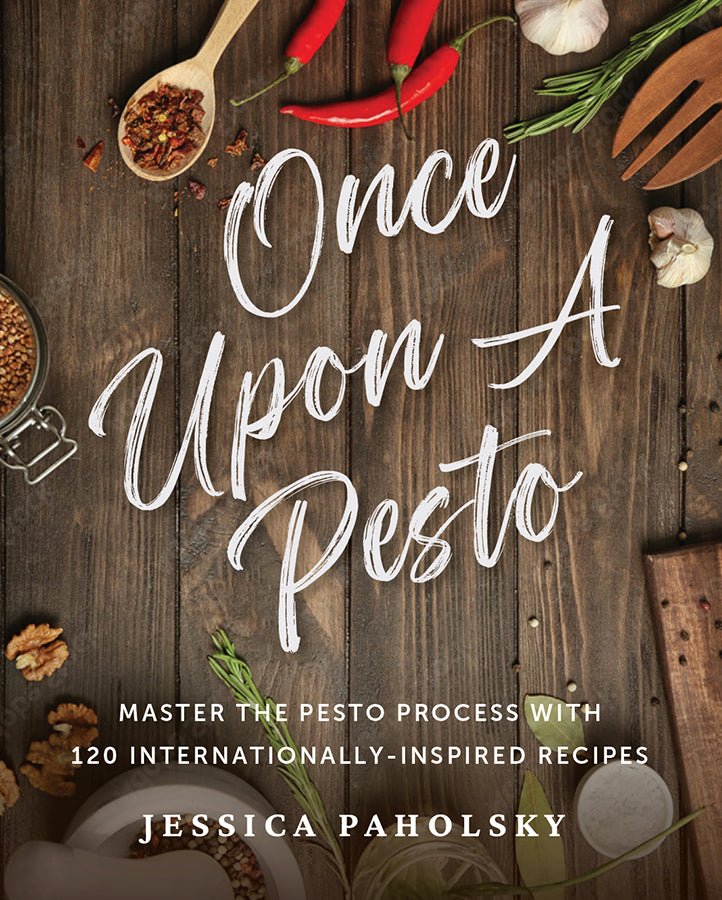
Once Upon a Pesto: Master the Pesto Process
by Jessica Paholsky
An enchanting culinary journey through 40 countries, Once Upon a Pesto unlocks the creative potential of pesto with 120 internationally inspired recipes that explore food history and culture.


