Editorial
How to Stop Copying and Start Drawing Like Yourself
Every artist eventually hits the same wall. You've practiced. You can copy a photo reasonably well. You understand the basics. But your drawings don't feel like yours. They feel like careful imitations of someone else's work.
Charles Berton wrote How to Draw with Artistic Freedom and Expression for exactly that moment. It's a step-by-step drawing guide designed to help readers build real technical skills while developing something even more valuable: an artistic eye and a style that's uniquely their own.
Berton is a book illustrator, graphic artist, and teacher, and his approach reflects all three roles. As a teacher, he knows that technique matters. You can't express yourself freely if you're constantly fighting your own hand. So the book covers the fundamentals professional artists rely on, from proportions and drawing people to creating interesting characters. As an illustrator and graphic artist, he knows that the real magic happens when technique meets personality, so he pushes readers to experiment, reinterpret, and make choices.
Proportion is a great example of how knowing the rules helps you break them well. Artists have long used simple measuring systems to draw the human figure convincingly. One classic guideline measures the body in "heads": a realistic adult figure is often drawn around seven and a half to eight heads tall, while heroic comic book figures are frequently stretched even taller, and cute cartoon characters are often drawn with oversized heads and much shorter bodies. Once you understand the standard, you can deliberately exaggerate or distort it to create a mood, a personality, or a style. That's the difference between a drawing that's accidentally off and one that's intentionally expressive.
The book also dives into two hugely popular forms: manga and comic strips. Manga, the Japanese comics tradition, has become a global phenomenon with a distinctive visual language, including expressive eyes, dynamic action lines, and clever ways of showing emotion. Comic strips, meanwhile, demand economy and timing, telling a story or landing a joke in just a few panels. Learning both helps artists think about storytelling, character design, and how images communicate, skills that apply far beyond comics.
What sets Berton's book apart from many drawing guides is its practical view of art as a possible career. Along with the lessons, he explores ways to turn artistic skills into income and pursue a path as a professional artist. For aspiring illustrators, comic creators, and designers, that real-world perspective is invaluable. It treats art as something you can build a life around, not just a hobby.
But at its heart, the book has a simple purpose: to have fun, learn new drawing techniques, and create something uniquely your own. Berton encourages readers to see the world around them in new and fascinating ways, break it down, reinterpret it, and bring it to life through their own artistic vision. Personal style, he suggests, isn't something you find by waiting for inspiration. It's something you develop by making lots of work, experimenting freely, and paying attention to what excites you.
At more than 300 pages, How to Draw with Artistic Freedom and Expression is a substantial resource that artists can return to again and again as their skills grow. It's perfect for teens and adults who want to move beyond copying, aspiring comic and manga artists, art students, and anyone dreaming of turning their drawing into a career.
How to Draw with Artistic Freedom and Expression by Charles Berton is available now in paperback and hardcover.
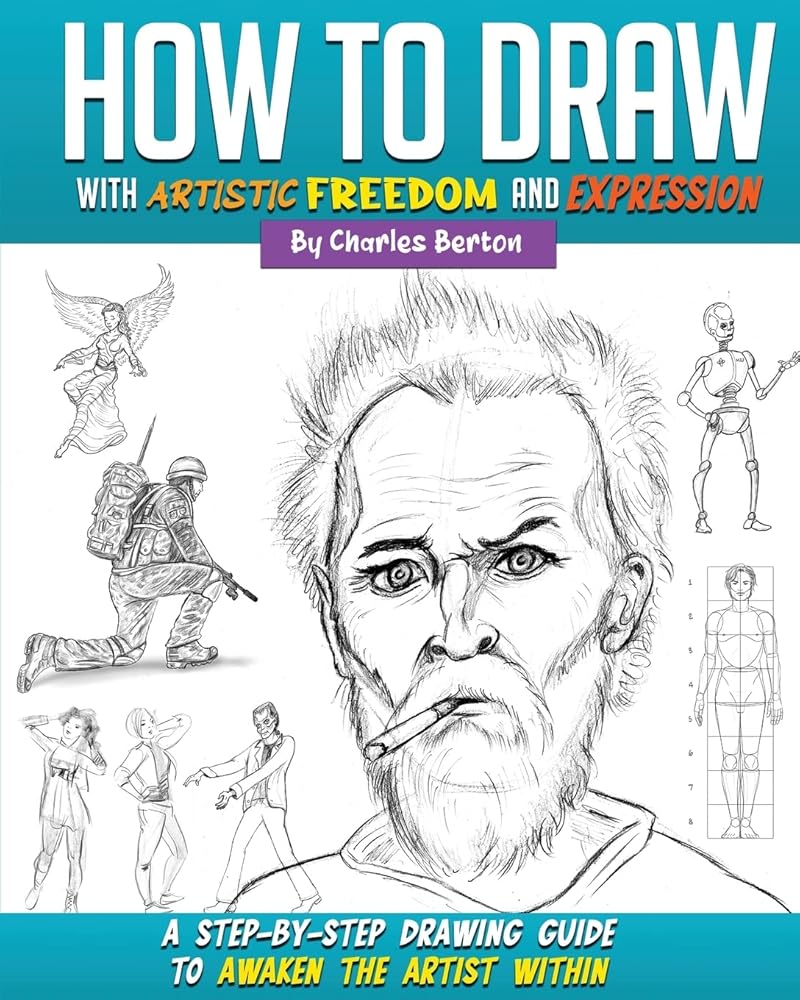
How to Draw with Artistic Freedom and Expression
by Charles Berton
Artistic freedom and expression are instrumental in opening new doors of possibilities, where artists can conduct their own experiments in drawing and develop their own ways, techniques, and styles.


